
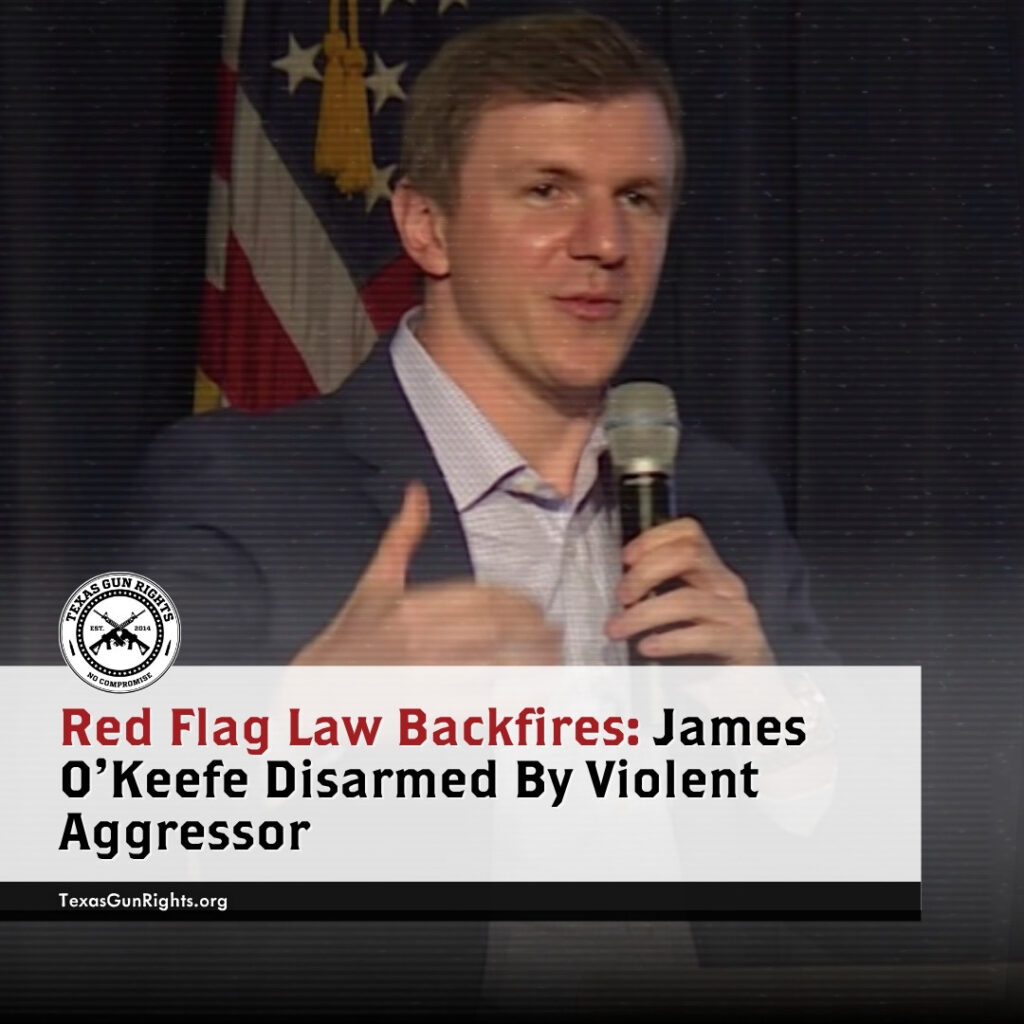
A Florida judge recently reversed a firearms ban placed on investigative journalist James O’Keefe, restoring his Second Amendment rights after they were stripped away under a court order tied to a personal dispute.
But while O’Keefe has regained his rights, the case is raising a far more troubling question for gun owners across the country:
What happens when the system disarms the wrong person?
Take the Guns First, Due Process Later
The incident began with a restraining order stemming from a dispute between O’Keefe and a former associate.
That order triggered the seizure of O’Keefe’s firearms, with law enforcement reportedly entering his newsroom to confiscate them.
At the time, O’Keefe had not been convicted of any crime.
He had not been found guilty of wrongdoing.
Yet his firearms were taken — immediately — with the legal process coming afterward.
Only later did a judge review the case and reverse the restriction, allowing him to reclaim his property.
Cases like this highlight a fundamental problem with red flag-style laws.
In emotionally charged disputes — whether personal, business-related, or political — one party can make allegations that trigger immediate consequences for the other.
And when those consequences include gun confiscation, the stakes become far more serious.
In this case, reports indicate the individual who sought the restraining order had engaged in disturbing conduct, including allegedly firing a bullet through a photograph of O’Keefe.
Yet despite those claims, it was O’Keefe — not the accuser — who was disarmed.
That reality underscores a dangerous imbalance.
The person making the accusation is not the one facing immediate consequences.
The accused is.
The Danger No One Talks About
Supporters of red flag laws argue they are designed to prevent violence.
But cases like this reveal a deeper risk.
In some situations, the individual being disarmed may not be the threat at all.
They may be the one trying to protect themselves.
Under red flag laws, courts often act based on one side of the story, before the accused has a full opportunity to respond.
That means constitutional rights can be suspended first, and sorted out later.
And when that happens, the wrong person can lose their ability to defend themselves at exactly the wrong time.
Texas Took Action to Stop This
In Texas, lawmakers took a different approach.
In 2025, Texas Gun Rights led the fight to ban red flag-style gun confiscation laws in the state — legislation signed into law by Governor Greg Abbott.
The goal was simple: prevent exactly this kind of scenario from happening to law-abiding citizens.
Texas Gun Rights President Chris McNutt said the O’Keefe case proves those concerns were justified.
“This is exactly the kind of abuse we warned about,” McNutt said. “No one should lose their constitutional rights based on accusations alone, especially in situations where they may be the one at risk. The Second Amendment doesn’t come with an asterisk for due process.”
While O’Keefe ultimately had his rights restored, the broader issue remains unresolved.
Red flag laws are still in place in multiple states, and proposals continue to surface at the federal level.
For gun owners, the concern is not just about one case.
It’s about the precedent.
If constitutional rights can be taken based on unproven claims, even temporarily, then those rights are no longer secure. They are conditional.
And rights that can be taken first and restored later are not truly protected.
Texas Gun Rights is actively working to stop these abuses before they happen… not after the damage is already done.
If you believe red flag laws should be banned nationwide and constitutional rights defended without compromise, chip in $25, $50, or whatever you can today to Texas Gun Rights.
Because protecting your rights after they’re taken isn’t enough.
They must be defended before they’re ever touched.