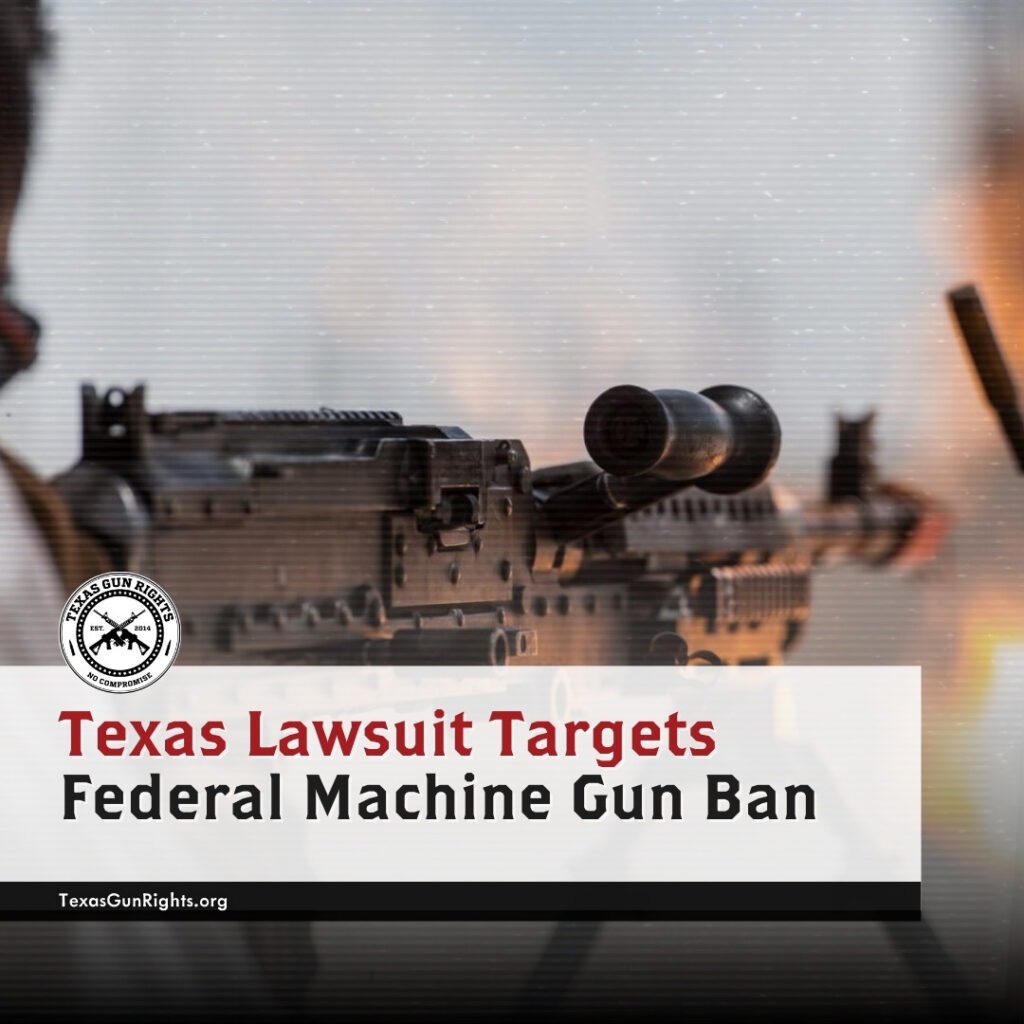
The case, filed by members of the Temple Gun Club along with individual plaintiffs, argues that Congress never had the constitutional authority to impose the sweeping ban in the first place.
Specifically, the lawsuit challenges the Hughes Amendment, a provision added to the Firearm Owners Protection Act of 1986 that made it illegal for civilians to possess machine guns manufactured after May 19, 1986.
While pre-1986 machine guns can still be legally owned if registered under the National Firearms Act, the law effectively froze the supply of transferable machine guns — driving prices into the tens of thousands of dollars and putting them out of reach for most Americans.
The lawsuit argues the federal government exceeded its authority under the Commerce Clause by criminalizing simple possession of a firearm without demonstrating a legitimate connection to interstate commerce.
If the court agrees, the case could reopen one of the biggest constitutional battles over federal gun laws in decades.
Challenging a Longstanding Precedent
The lawsuit also asks the Fifth Circuit to reconsider a 1997 ruling (United States v. Knutson) that previously upheld the machine gun ban.
But legal advocates say the legal landscape has changed dramatically since that decision.
In recent years, courts have increasingly scrutinized federal gun laws following the U.S. Supreme Court’s landmark Bruen decision, which requires firearm restrictions to be consistent with the historical tradition of the Second Amendment.
For gun rights advocates, the case represents yet another opportunity to challenge decades of federal overreach.
The Stakes for Gun Owners
If the lawsuit succeeds, it could dramatically reshape federal firearms law by striking down the federal government’s ability to ban entire classes of arms from civilian ownership.
Texas Gun Rights President Chris McNutt said the case highlights the deeper constitutional principle behind the Second Amendment.
“The Second Amendment wasn’t written so Americans could hunt deer,” McNutt said. “It was written so free citizens would never be outgunned by their own government. An armed society is a polite society — and a free one.”
For gun rights advocates, the lawsuit underscores a broader truth: the Second Amendment was designed to ensure citizens retain the means to defend themselves — not just from criminals, but from government overreach as well.
And now, nearly 40 years after the federal machine gun ban took effect, that principle is once again being tested in federal court.
Chip in to Texas Gun Rights today to help expose the gun confiscation agenda and defend the Second Amendment across Texas and America.