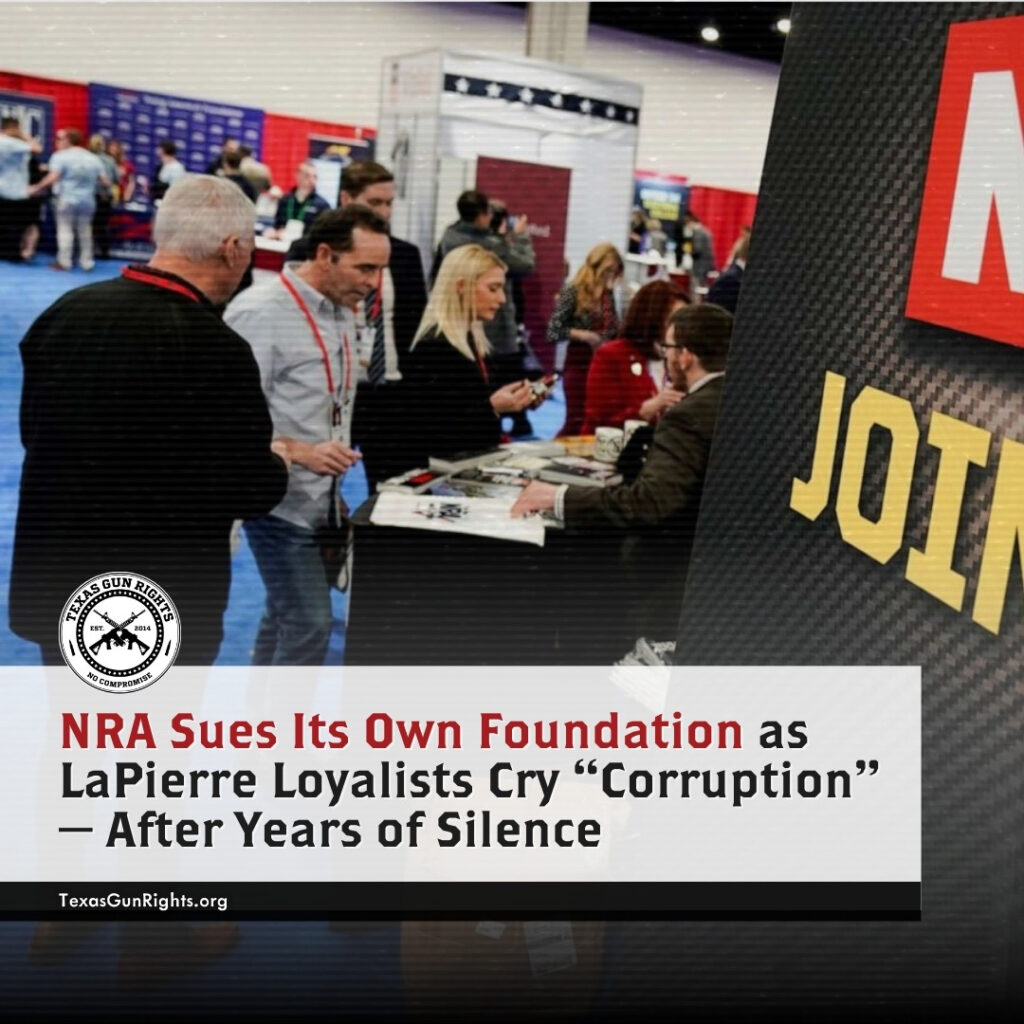
In a lawsuit filed this month, the NRA is suing the NRA Foundation, its own charitable arm, alleging the misuse of roughly $160 million raised alongside the NRA name.
According to the complaint, the Foundation has frozen funding to NRA programs while continuing to solicit donations using NRA trademarks and branding.
The lawsuit alleges trademark infringement, trademark dilution, unfair competition, donor deception, and the unauthorized diversion of charitable assets, accusing the Foundation of operating as a hostile entity while exploiting the NRA’s name and goodwill.
A Power Struggle
For years, Wayne LaPierre presided over a culture of excess — private jets, luxury suits, sweetheart contracts, and financial shell games — all while NRA membership declined and donors fled.
But after internal reforms stripped the old guard of control inside the NRA, attention shifted to the NRA Foundation — a nonprofit established in 1990 to manage tax-deductible donations for NRA-affiliated education and safety programs such as Eddie Eagle GunSafe.
Today, the Foundation controls tens of millions of dollars in assets.
And according to the NRA’s lawsuit, governance changes at the Foundation locked in trustees aligned with figures from the pre-reform era, limiting the NRA Board’s ability to exert oversight.
The complaint describes the Foundation’s leadership as being dominated by former NRA board members allied with past leadership, who allegedly lost control of the NRA’s Board after reforms but retained control over the charitable arm.
The result, the NRA claims, is a Foundation that raises money under the NRA brand while refusing to fund NRA programs — effectively starving the parent organization while remaining flush with donor cash.
Foundation defenders argue in response that the dispute is about independence and protecting donor money, something they were silent about under the leadership of LaPierre.
Ultimately, Wayne LaPierre did not act alone. He was protected. Enabled. Defended.
And now, many of the people critics say helped create that disaster — and who now control the NRA Foundation — are attempting to rewrite history, casting themselves as whistleblowers instead of bystanders.
So the NRA’s civil war is not about ethics. It is about who controls $160 million and the NRA brand after the king is gone.
Gun owners deserve better than recycled leadership and selective outrage.
And until the old guard answers for its silence when it mattered most, calls for “financial independence” will continue to ring as hollow as the NRA’s credibility did under Wayne LaPierre.